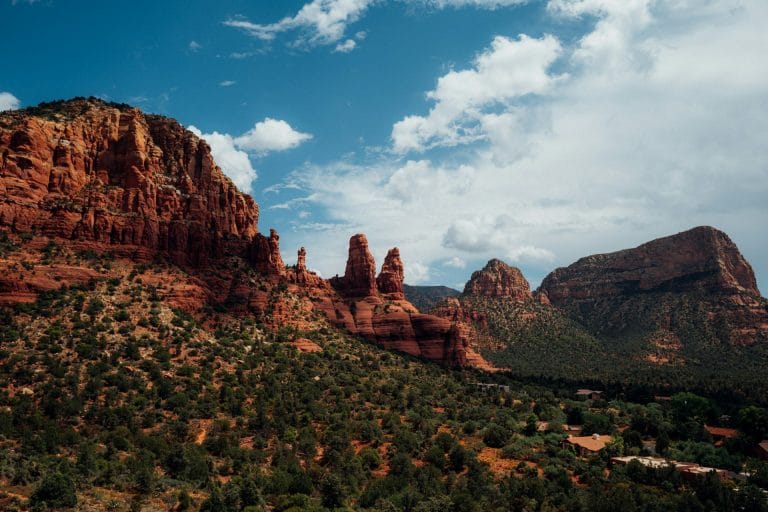

Phoenix has plenty of attractions everybody tells you to visit.
But what if you’ve already seen the obvious places?
Or maybe you’re the kind of traveler who would rather discover an archaeological site beside the airport, walk through a Japanese garden hidden downtown, find an urban waterfall, explore an old neighborhood or stand beside a pyramid containing the tomb of Arizona’s first governor.
That’s the Phoenix we’re looking for.
Beyond the resorts, golf courses and familiar attractions is a city filled with unusual history, overlooked landscapes and places that even longtime residents can drive past without realizing they’re there.
Here are 12 unique things to do in Phoenix that aren’t tourist traps.
Quick Picks
Best Hidden History: S’edav Va’aki Museum
Strangest Landmark: Hunt’s Tomb
Best Quiet Escape: Japanese Friendship Garden
Best Unexpected Museum: Hall of Flame
Best Local History: Heritage Square
Best Urban Surprise: Arizona Falls
Best Desert Escape: South Mountain backroads
Best Architecture: Tovrea Castle
Best Sunset Alternative: Papago Park’s quieter trails
Best Free History Stop: Wesley Bolin Memorial Plaza
Best Arts Neighborhood: Roosevelt Row beyond the main strip
Best Place to Wander: Historic neighborhoods around central Phoenix
1. Walk Through 1,500 Years of Phoenix History at S’edav Va’aki
You can spend days exploring modern Phoenix without realizing an ancient village survives almost directly beside Sky Harbor Airport.
S’edav Va’aki Museum—formerly known as Pueblo Grande Museum—is built around an archaeological site associated with the Ancestral Sonoran Desert People.
The village was settled around A.D. 500 and occupied for more than 1,000 years.
What makes the site particularly fascinating is the engineering.
Long before Phoenix became a sprawling desert metropolis, communities here constructed sophisticated irrigation canals that transformed the Salt River Valley into agricultural land.
Today you can walk a roughly two-thirds-mile outdoor interpretive trail past a platform mound, archaeological features, reconstructed dwellings and evidence of those ancient canal systems.
City Unknown Tip
Don’t treat this as simply another museum.
Spend time outside.
Then look at modern Phoenix and consider how much of today’s city still depends on the same basic idea that made settlement here possible centuries ago:
Moving water through the desert.
Why it’s worth the detour: Few attractions connect modern Phoenix so directly with the people who lived in the Salt River Valley centuries before it became a city.
2. Find a Japanese Garden Hidden Downtown
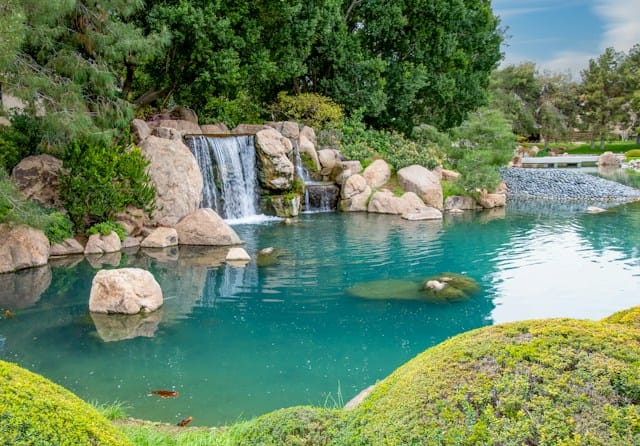
Downtown Phoenix probably isn’t where you’d expect to find waterfalls, koi ponds and a carefully designed Japanese stroll garden.
But that’s exactly what you’ll find at the Japanese Friendship Garden.
Known as RoHoEn, the garden was created through Phoenix’s sister-city relationship with Himeji, Japan.
Inside are winding pathways, stone bridges, streams, more than 50 varieties of plants, a koi pond and a 12-foot waterfall.
The garden uses a traditional hide-and-reveal design in which the entire landscape is never visible at once.
Instead, new views appear as you walk.
That’s exactly how you should experience it.
Slowly.
City Unknown Tip
Visit early or later in the day rather than trying to squeeze it between several downtown attractions.
This is one place where rushing defeats the purpose.
Why it’s worth the detour: It feels remarkably removed from the city despite being only blocks from downtown Phoenix.
3. Find the Pyramid in Papago Park
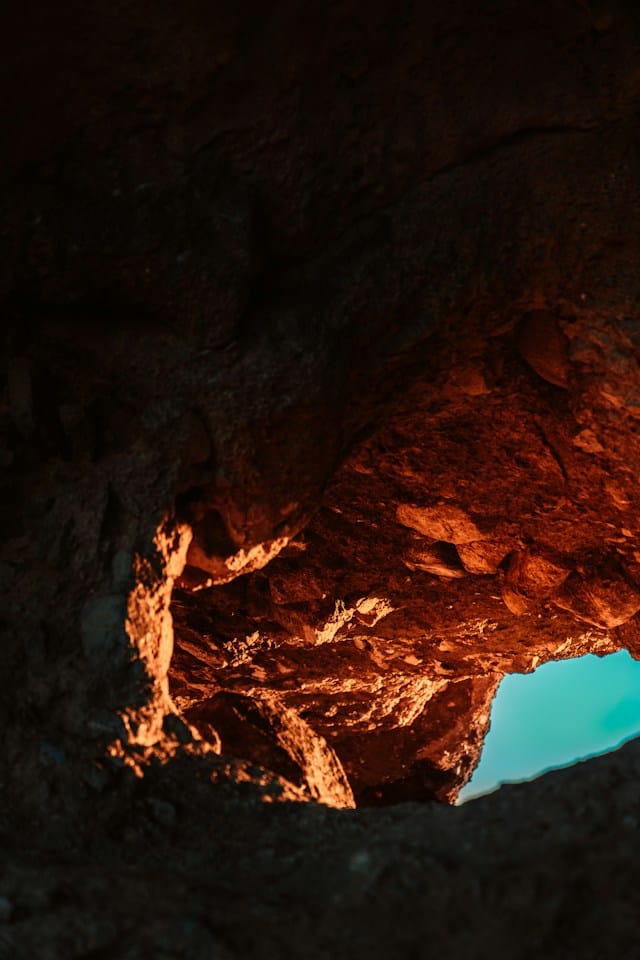
Most people visit Papago Park for Hole-in-the-Rock.
We’re going somewhere else.
Hidden among the park’s desert landscape is a stark white pyramid known as Hunt’s Tomb.
It is the final resting place of George W. P. Hunt, Arizona’s first governor, along with members of his family.
The pyramid sits on a hill with expansive views across Papago Park and toward Phoenix.
And somehow, despite being near some of the Valley’s most heavily visited attractions, plenty of visitors never know it’s there.
City Unknown Tip
Combine Hunt’s Tomb with a walk through the less-busy portions of Papago Park instead of making Hole-in-the-Rock your only destination.
Late-afternoon light can make the surrounding red sandstone formations particularly impressive.
Why it’s worth the detour: Because finding a giant white pyramid in the Arizona desert is considerably more interesting than another generic scenic overlook.
4. Discover a Waterfall in the Middle of Phoenix
Waterfall.
Phoenix.
Those aren’t words you usually expect to find together.
But along the Arizona Canal near 56th Street is Arizona Falls.
The site takes advantage of a natural drop in the canal that once attracted residents looking for relief from the desert heat.
Today the location combines public art, water and hydroelectric power.
It’s one of those places that makes you wonder how many times you’ve driven nearby without knowing it existed.
Don’t expect Niagara Falls
That’s not the point.
Arizona Falls is interesting because of its setting and history.
You’re standing beside flowing water and hydroelectric infrastructure in the middle of one of America’s largest desert cities.
City Unknown Tip
Combine it with a walk or bike ride along the canal rather than driving there, taking one photograph and immediately leaving.
Why it’s worth the detour: It’s an unusual intersection of Phoenix history, public space, engineering and water.
5. Tour Phoenix’s “Wedding Cake” Castle
If you’ve driven around east Phoenix, you’ve probably seen it.
A strange tiered building rises from a cactus-covered hill near Van Buren Street.
That’s Tovrea Castle at Carraro Heights.
Often nicknamed the “wedding cake,” the four-story structure is one of Phoenix’s most recognizable architectural oddities.
But seeing it from the freeway and actually exploring the property are very different experiences.
Guided tours take visitors through the property’s cactus gardens and historic structures before entering portions of the castle itself.
There’s a catch
You can’t simply arrive and wander around.
Access is by guided tour, and tickets can be difficult to obtain.
That actually helps keep this from feeling like another crowded tourist attraction.
City Unknown Tip
If you’re planning a Phoenix trip specifically around Tovrea Castle, secure the tour before building the rest of your itinerary.
Why it’s worth the detour: You’ve probably seen the castle from the road. Very few people actually know its story.
6. See One of the World’s Most Unusual Firefighting Collections

Here’s one you probably weren’t expecting.
Near Papago Park is a museum filled with historic fire engines and firefighting equipment dating back centuries.
The Hall of Flame Museum of Firefighting contains restored apparatus from the United States and other countries along with exhibits exploring the history of firefighting and honoring firefighters who died in the line of duty.
Even if you’ve never considered yourself interested in fire engines, the craftsmanship of the earliest equipment can be fascinating.
Some pieces look more like elaborate carriages than emergency vehicles.
City Unknown Tip
This is also a very good Phoenix summer option.
When outdoor temperatures make hiking unpleasant or unsafe, an unusual indoor museum suddenly becomes much more attractive.
Why it’s worth the detour: It’s specialized, unexpected and unlike almost anything else you’ll do in Phoenix.
7. Walk Through the Phoenix That Almost Disappeared
Modern downtown Phoenix doesn’t give you many clues about what the city looked like in the late 1800s.
Heritage Square does.
The historic district preserves a collection of late-19th-century buildings near downtown, including the Rosson House.
Surrounded by modern Phoenix, the old homes create a strange visual contrast.
You can almost imagine the early city disappearing beneath the towers, stadiums and streets surrounding it.
Look beyond the Rosson House
The house is the centerpiece, but don’t make it your only reason for visiting.
Walk the surrounding blocks.
Look at how the historic structures relate to modern downtown.
Then continue your walk through some of Phoenix’s older neighborhoods.
City Unknown Tip
Pair Heritage Square with Roosevelt Row and make the journey between them part of your exploration.
Why it’s worth the detour: It’s one of the easiest places to see how dramatically Phoenix has changed.
8. Wander Beyond the Main Stretch of Roosevelt Row
Roosevelt Row isn’t exactly hidden anymore.
But most visitors experience only a small portion of it.
They arrive, photograph a few murals, visit a restaurant and leave.
Instead, use Roosevelt Row as the beginning of a walk.
Explore the side streets.
Look for smaller murals.
Pay attention to old houses tucked between newer developments.
Visit independent businesses.
And continue north and east into the surrounding historic neighborhoods.
Phoenix makes much more sense when you get out of the car occasionally.
City Unknown Tip
Go in the late afternoon.
Explore before sunset, stop somewhere locally owned for dinner and then walk the district after dark when temperatures are more comfortable.
Why it’s worth the detour: The interesting part isn’t necessarily the famous mural. It’s what you discover two blocks away.
9. Explore South Mountain Without Making the Summit the Goal
South Mountain Park and Preserve is enormous.
Yet many visitors approach it with one objective:
Get to a viewpoint.
Take a picture.
Leave.
Try the opposite.
Explore some of the lower trails and quieter areas.
Drive portions of the park slowly.
Stop at overlooks that don’t have crowds gathered around them.
Look at the desert vegetation.
And give yourself enough time to experience how quickly Phoenix disappears once the mountains surround you.
City Unknown Tip
Early morning is hard to beat.
The desert is cooler, shadows emphasize the mountains and wildlife tends to be more active.
Avoid strenuous hiking during dangerous heat.
Why it’s worth the detour: You don’t need to drive hours outside Phoenix to feel like you’ve escaped Phoenix.
10. Walk Through Arizona History at Wesley Bolin Memorial Plaza
Across from the Arizona State Capitol is a landscape filled with memorials.
Most visitors to Phoenix never see it.
Wesley Bolin Memorial Plaza contains monuments dedicated to military veterans, public safety personnel, historic events and people connected to Arizona history.
Instead of one enormous centerpiece, you’ll find memorial after memorial as you walk through the grounds.
Some are traditional.
Others are surprisingly elaborate.
Make it a history loop
Combine the plaza with the Arizona Capitol area and nearby historic neighborhoods.
It costs nothing to walk through and can easily become part of a larger exploration of central Phoenix.
City Unknown Tip
Don’t rush from monument to monument.
Read the plaques.
Some of the stories represented here reveal pieces of Arizona history that rarely make it into travel guides.
Why it’s worth the detour: It’s free, historically interesting and largely overlooked by visitors.
11. Explore the Historic Neighborhoods Around Central Phoenix
Sometimes the best attraction isn’t an attraction at all.
Phoenix contains several older neighborhoods where mature trees, historic homes and narrow residential streets feel completely different from the city’s newer suburbs.
Instead of driving directly from one attraction to another, spend part of an afternoon wandering central Phoenix.
Look around the neighborhoods near Roosevelt, Encanto and the older portions of downtown.
You’ll find architecture and streetscapes that challenge the stereotype that everything in Phoenix is new.
Remember
These are neighborhoods.
People live here.
Explore respectfully, stay on public streets and sidewalks, don’t enter private property and don’t treat someone’s home like a tourist attraction.
City Unknown Tip
Walking or biking reveals much more than driving.
Look for small parks, unusual architecture, neighborhood businesses and pieces of Phoenix history hiding in plain sight.
Why it’s worth the detour: You’ll experience Phoenix as a city people actually live in rather than as a collection of attractions.
12. Make Papago Park About More Than Hole-in-the-Rock
Yes, we’re returning to Papago Park.
There’s a reason.
Most people arrive with one objective:
Hole-in-the-Rock.
It’s easy, recognizable and heavily photographed.
But Papago Park covers a much larger desert landscape.
Walk beyond the famous formation.
Explore the trails around the sandstone buttes.
Look for quieter viewpoints.
Find Hunt’s Tomb if you skipped it earlier.
Watch the light change across the red rock.
City Unknown Tip
Don’t arrive five minutes before sunset and join everybody scrambling toward the same viewpoint.
Come earlier.
Explore first.
Then find your own place to watch the desert change color.
Why it’s worth the detour: The best part of Papago Park isn’t necessarily the hole everybody photographs.
Build Your Own Hidden Phoenix Day
Don’t try to visit all twelve in one day.
Instead, group them.
Hidden History Day
S’edav Va’aki → Tovrea Castle → Heritage Square → Wesley Bolin Memorial Plaza
Best for Phoenix history and unusual architecture.
Quiet Phoenix Day
Japanese Friendship Garden → Historic Neighborhoods → Arizona Falls
Best when you want something slower than the usual attraction checklist.
Weird Phoenix Day
Hunt’s Tomb → Hall of Flame → Tovrea Castle
Probably the most City Unknown itinerary of the bunch.
Outdoor Phoenix Day
Papago Park → Arizona Falls → South Mountain
Best during cooler weather when you can comfortably spend most of the day outdoors.
What About Mystery Castle?
Mystery Castle would normally be near the top of this list.
Built into the foothills near South Mountain, the eccentric 18-room structure was created by Boyce Luther Gulley using stone, adobe and salvaged materials.
It’s exactly the sort of place City Unknown exists to find.
But there’s a problem.
Mystery Castle is currently closed to visitors while preservation work is underway.
Rather than telling you to drive across Phoenix to stare at a locked attraction, we’re leaving it off the official 12.
If tours resume, put this one back on your Phoenix list.
The City Unknown Rule for Phoenix
Here’s the rule:
If everybody is standing in the same place taking the same photograph, keep exploring.
Go to Papago Park.
Just don’t stop at Hole-in-the-Rock.
Visit downtown.
But walk beyond the entertainment districts.
Explore South Mountain.
But don’t make the most famous viewpoint your only destination.
The goal isn’t to avoid every popular attraction.
Popular places are often popular for good reasons.
The goal is to discover something else while you’re there.
Before Exploring Phoenix
Phoenix requires different planning depending on the season.
During cooler months, outdoor exploration can fill an entire day.
Summer is different.
Extreme heat can make hiking dangerous, particularly during the afternoon. Don’t judge a trail only by its distance. A short desert trail can become serious when temperatures climb.
Start outdoor activities early, carry plenty of water and move museums and indoor attractions into the hottest part of the day.
And don’t overlook Phoenix’s size.
Two attractions that appear to be “in Phoenix” can still involve considerable driving.
Build your itinerary geographically instead of zigzagging across the Valley.
Find the Phoenix Most Visitors Miss
Phoenix becomes much more interesting once you stop expecting every worthwhile place to appear on a Top 10 attractions list.
There’s ancient history beside the airport.
A Japanese garden behind downtown streets.
A pyramid in the desert.
A hydroelectric waterfall along a canal.
A strange castle rising above the freeway.
Historic houses surrounded by skyscrapers.
And hundreds of trails, neighborhoods and desert corners most visitors never explore.
So see the famous stuff if you want.
Then give yourself an afternoon without a checklist.
Turn down a street you’ve never taken.
Walk another block.
Follow the canal.
Take the quieter trail.
That’s usually where Phoenix gets interesting.
Frequently Asked Questions
What are some unique things to do in Phoenix?
S’edav Va’aki Museum, Tovrea Castle, the Japanese Friendship Garden, Arizona Falls, Hunt’s Tomb, Hall of Flame and Wesley Bolin Memorial Plaza offer experiences beyond Phoenix’s usual tourist attractions.
What are some non-touristy things to do in Phoenix?
Explore central Phoenix’s historic neighborhoods, walk along the Arizona Canal, visit lesser-known areas of Papago Park, explore S’edav Va’aki and spend time on South Mountain’s quieter trails and roads.
Are there hidden gems in downtown Phoenix?
Yes. The Japanese Friendship Garden, Heritage Square, historic neighborhoods and smaller streets surrounding Roosevelt Row make it easy to build a downtown trip that goes beyond the city’s major attractions.
What are some weird things to see in Phoenix?
Hunt’s Tomb is a white pyramid in Papago Park, Tovrea Castle resembles a tiered wedding cake, and Arizona Falls combines a waterfall, public art and hydroelectric power along the Arizona Canal.
What can you do in Phoenix when it’s too hot to hike?
Use the hottest hours for indoor attractions such as the Hall of Flame and other museums, then move outdoor exploration to early morning or evening.
Is Mystery Castle open?
Mystery Castle is currently closed while preservation work is underway. Check its current status before making plans specifically to visit it.