Birmingham has a funny way of surprising you.
Most first-time visitors arrive knowing something about the city’s Civil Rights history, its iron-and-steel past, or maybe that enormous iron fellow standing on Red Mountain watching everybody below.
But spend a little time wandering around the Magic City and Birmingham starts revealing another personality.
There are abandoned-looking furnaces you can actually walk through, old mining trails hidden in the woods, Saturday markets where half the city seems to know each other, historic baseball parks, neighborhood hangouts and viewpoints that make you wonder why nobody told you about them sooner.
That’s the Birmingham I like.
Not necessarily the places with the biggest billboards—the places where you start feeling like you’ve discovered your own little corner of the city.
So loosen the itinerary, bring comfortable shoes, and maybe arrive hungry.
Here are 12 Birmingham hidden gems locals love.
1. Ruffner Mountain — A Wilderness Escape Inside the City
You don’t have to drive two hours from Birmingham to disappear into the woods.
Sometimes you just have to drive across town.
Ruffner Mountain is an urban nature preserve filled with wooded trails, remnants of Birmingham’s mining history and overlooks where the city skyline suddenly appears beyond the trees. The preserve encompasses more than 1,000 acres of former mining land.
That’s one of the things I love about Birmingham: nature and industrial history keep bumping into each other.
Why Go
Come for hiking, birdwatching, photography or simply a couple of hours away from traffic.
Some trails pass remnants from the area’s mining days, making Ruffner considerably more interesting than your average city park.
City Unknown Tip: Go early in the morning when temperatures are cooler and the trails are quieter. Bring water—Alabama humidity has humbled many an overly confident hiker.
2. Sloss Furnaces — Birmingham’s Industrial Past Up Close
Let’s get something straight.
A giant abandoned blast furnace shouldn’t be this fascinating.
And yet…
Sloss Furnaces operated for nearly 90 years before iron production stopped in 1971. Today it’s a National Historic Landmark where visitors can wander among massive furnaces, pipes, machinery and industrial structures that helped build Birmingham.
Even better, admission for the regular self-guided experience is free.
It’s gritty.
It’s enormous.
It’s slightly eerie.
And it’s completely Birmingham.
City Unknown Tip: Photographers could spend hours here. Go when the light is softer and suddenly rusty pipes start looking like industrial artwork.
Plan Your Sloss Furnaces Visit
3. The Market at Pepper Place — Saturday Morning, Birmingham Style
Want to know where locals disappear to on Saturday morning?
Follow the smell of coffee.
The Market at Pepper Place is part farmers market, part neighborhood gathering and part weekly excuse to eat something delicious before you’ve properly decided what you’re having for breakfast.
The surrounding Pepper Place district occupies restored historic buildings and includes locally owned shops, restaurants, wellness businesses and design showrooms. It’s also only about a five-minute walk from Sloss Furnaces.
You’ll find local produce, baked goods, makers and plenty of Alabama flavor.
City Unknown Tip: Arrive hungry and don’t make breakfast plans beforehand. Consider the market your breakfast plan.
4. Kiwanis Vulcan Trail — The Side of Vulcan Most Visitors Miss
Everybody knows Vulcan.
The 56-foot cast-iron statue has been staring down at Birmingham for generations. In fact, Vulcan Park calls him the world’s largest cast-iron statue.
But here’s the part many visitors miss:
the trail.
The Kiwanis Vulcan Trail follows the ridge of Red Mountain for about 2.2 miles, providing a surprisingly peaceful walk and views toward downtown Birmingham.
You’ll get woods, history and skyline views without venturing far from downtown.
City Unknown Tip: Pair the trail with Vulcan Park. Walk first, then head up for the bigger city view. Your legs may complain. Your camera won’t.
5. Rickwood Field — Baseball’s Time Machine
Modern baseball stadiums are nice.
Big scoreboards. Fancy seats. Enough food options to require a spreadsheet.
But sometimes you want baseball to feel like baseball again.
Enter Rickwood Field.
Built in 1910, Rickwood became home to both the Birmingham Barons and Birmingham Black Barons. Legends including Willie Mays and Satchel Paige played here.
Walk around and you can almost imagine the crack of a wooden bat echoing through another era.
This isn’t merely a sports attraction.
It’s American history wearing a baseball cap.
City Unknown Tip: Check the event schedule before going. Access can vary depending on games and special events.
6. Birmingham Botanical Gardens — 67 Acres of “Where Did the City Go?”
There comes a moment while wandering Birmingham Botanical Gardens when you’ll realize you haven’t heard traffic for a while.
That’s usually a good sign.
Paths wind through themed gardens and beautifully landscaped spaces that make this an easy escape when Birmingham’s summer heat isn’t trying to cook you.
The Japanese Garden is especially worth seeking out.
This is the kind of attraction that works equally well for photographers, couples, families and travelers who simply need somewhere peaceful after a busy morning sightseeing.
City Unknown Tip: Morning is your friend here—especially during summer. Alabama afternoon heat doesn’t negotiate.
7. Railroad Park — Birmingham’s Backyard
Railroad Park isn’t exactly secret anymore.
But tourists still have a habit of treating parks like blank spaces between “real attractions.”
Big mistake.
Railroad Park gives you lawns, walking paths, water features and one of those satisfying combinations of greenery, trains and Birmingham skyline.
Locals walk dogs here, exercise, picnic and meet friends.
In other words, this is less about sightseeing and more about experiencing Birmingham like somebody who actually lives here.
Grab something from a nearby restaurant and have yourself an inexpensive picnic.
City Unknown Tip: Visit toward evening. Downtown Birmingham looks particularly good when the late-day light hits the skyline.
8. Negro Southern League Museum — One of Birmingham’s Most Underrated Museums
Baseball fans shouldn’t stop with Rickwood.
The Negro Southern League Museum tells the story of Black baseball and the Negro Southern League through artifacts, exhibits and stories of players whose contributions extend far beyond Birmingham.
It’s located near Regions Field and Railroad Park, which makes it incredibly easy to include in a downtown walking day. The City of Birmingham also highlights Rickwood Field, Railroad Park and other major attractions as nearby complements to the museum.
Even people who aren’t serious baseball fans can come away fascinated.
Because again—this isn’t simply sports history.
It’s Birmingham history.
City Unknown Tip: Combine the museum, Railroad Park and lunch downtown. Three stops, very little driving, excellent day.
9. Avondale — Where Birmingham Goes to Hang Out
Sometimes the hidden gem isn’t an attraction.
It’s a neighborhood.
Avondale is the sort of Birmingham neighborhood where you can start with coffee, wander around, find lunch, stumble across a brewery or music venue and somehow realize several hours have disappeared.
And that’s exactly how you should explore it.
Don’t create a twelve-point itinerary.
Park.
Walk.
Eat.
Explore.
Repeat as necessary.
City Unknown Tip: Visit later in the afternoon and stay into the evening. Avondale becomes even more fun once Birmingham starts thinking about dinner and live music.
10. Alabama Theatre — Look Up Before the Movie Starts
From the outside, you might think:
“Nice old theater.”
Then you walk inside.
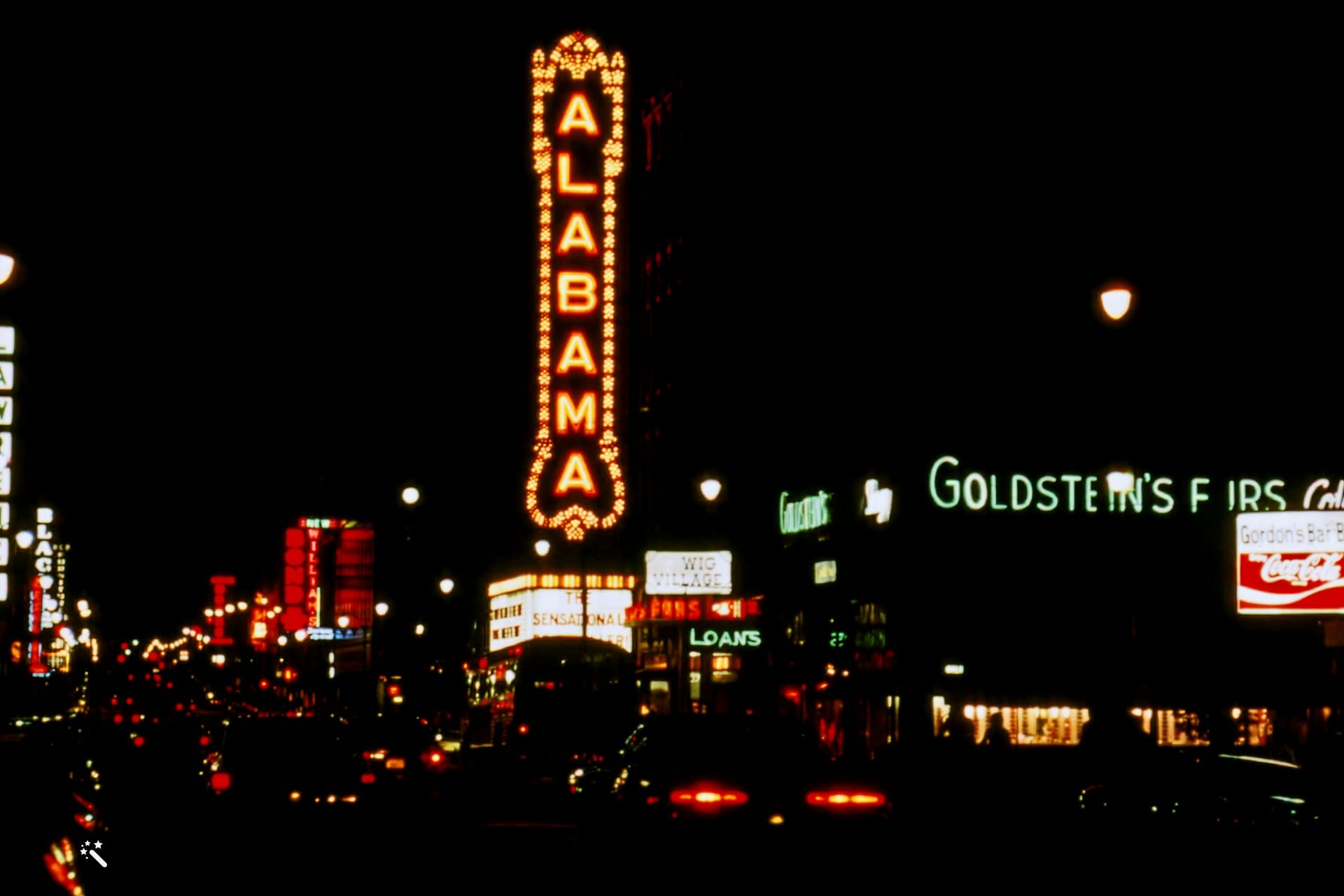
The historic Alabama Theatre is one of downtown Birmingham’s great survivors, and its elaborate interior takes you back to the golden age of movie palaces.
Find a classic movie, concert or special event and make an evening of it.
And don’t immediately sit down.
Look around.
Old theaters were designed to make going to a movie feel like an event, and this one still does.
City Unknown Tip: If the Mighty Wurlitzer organ is part of your event, even better. Arrive early enough to appreciate the theater before the lights go down.
See What’s Playing at the Alabama Theatre
11. Red Mountain Park — Birmingham’s Mining History Hiding in the Woods
Birmingham’s nickname—The Magic City—didn’t come from pulling rabbits out of hats.
The city’s explosive early growth was tied directly to iron and steel.
At Red Mountain Park, that industrial history hasn’t completely disappeared.
It’s hiding among the trees.
Trails weave through land once connected to Birmingham’s mining industry, with historic remnants scattered throughout the landscape.
That combination is quintessential Birmingham:
Nature reclaiming industry while leaving enough behind to tell the story.
City Unknown Tip: Don’t treat this merely as exercise. Pay attention to the industrial remnants along the way. They’re part of what makes hiking around Birmingham different from hiking almost anywhere else.
12. Forest Park — Birmingham’s “Just Wander Around” Neighborhood
Every city needs a neighborhood where the official itinerary should be:
No itinerary.
For Birmingham, Forest Park fits nicely.
Historic homes, tree-lined streets and local businesses make it a great place to spend an hour or two simply exploring.
Have lunch.
Find coffee.
Browse.
Then take the long way back downtown.
This is where Birmingham stops feeling like a collection of attractions and starts feeling like a city with neighborhoods worth discovering.
City Unknown Tip: Don’t be afraid to combine Forest Park and Avondale. They’re close enough that together they make a terrific “local Birmingham” afternoon.
Make It a Birmingham Hidden Gems Day
If I had one day to introduce somebody to the less-obvious side of Birmingham, I’d start early at Ruffner Mountain, then head toward Pepper Place.
After lunch, explore Sloss Furnaces before working back toward downtown for Railroad Park and the Negro Southern League Museum.
Then I’d finish around Avondale.
That gives you a little bit of everything Birmingham does particularly well:
Nature → Food → Industrial History → Local Culture → Neighborhood Life
And somewhere along the way, Birmingham will probably surprise you.
That’s the point.
City Unknown Tips for Exploring Birmingham
Birmingham isn’t a city I’d recommend exploring entirely from a checklist.
Give yourself room to wander between the big attractions. Some of the best discoveries are tucked into neighborhoods rather than sitting beside an interstate exit.
Also, remember Birmingham has hills. Lots of them. The city isn’t called Birmingham because somebody thought Alabama needed more flat ground.
If you’re visiting during summer, schedule outdoor exploring for morning or later afternoon whenever possible. Save museums, lunch and indoor attractions for the hottest part of the day.
And most importantly:
Eat local.
Birmingham has developed a food scene worth planning trips around. If the parking lot is crowded, the building looks slightly questionable and somebody’s grandmother is sitting at the next table…
You may be exactly where you need to be.
Keep Exploring Alabama With City Unknown
Don’t stop with Birmingham.
Turn your Birmingham adventure into a longer Alabama road trip by exploring our Alabama Hidden Gems, Alabama Day Trips, and 15 Hole-in-the-Wall Restaurants in Alabama guides.
And if you’re ready to get outside Birmingham entirely, our 10 Small-Town Alabama Day Trips Worth the Drive makes the perfect companion article.
That’s how I’d build the Alabama section of City Unknown: each article naturally sends readers into the next adventure rather than leaving them at the bottom of the page wondering where to go.