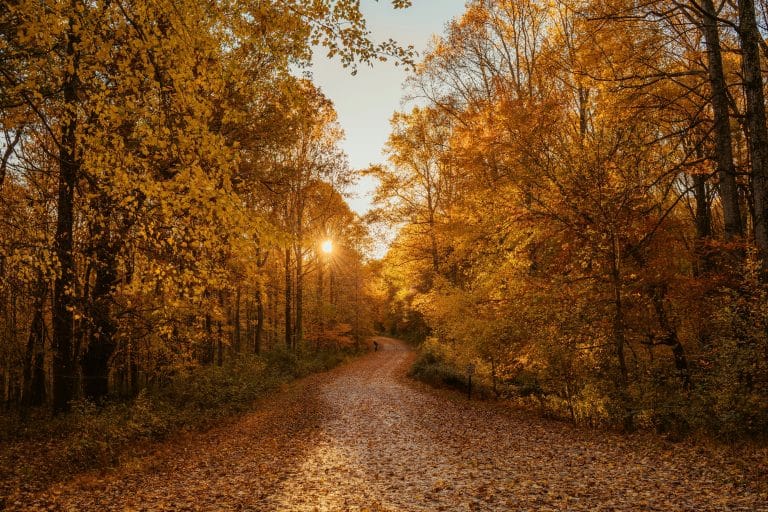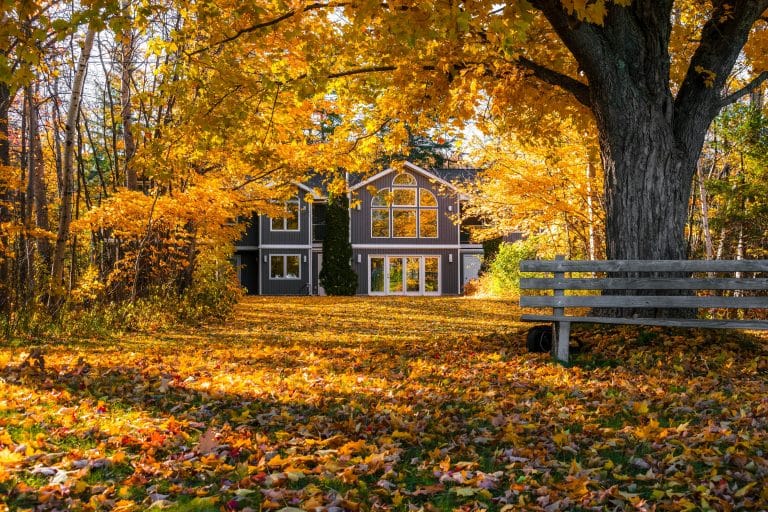
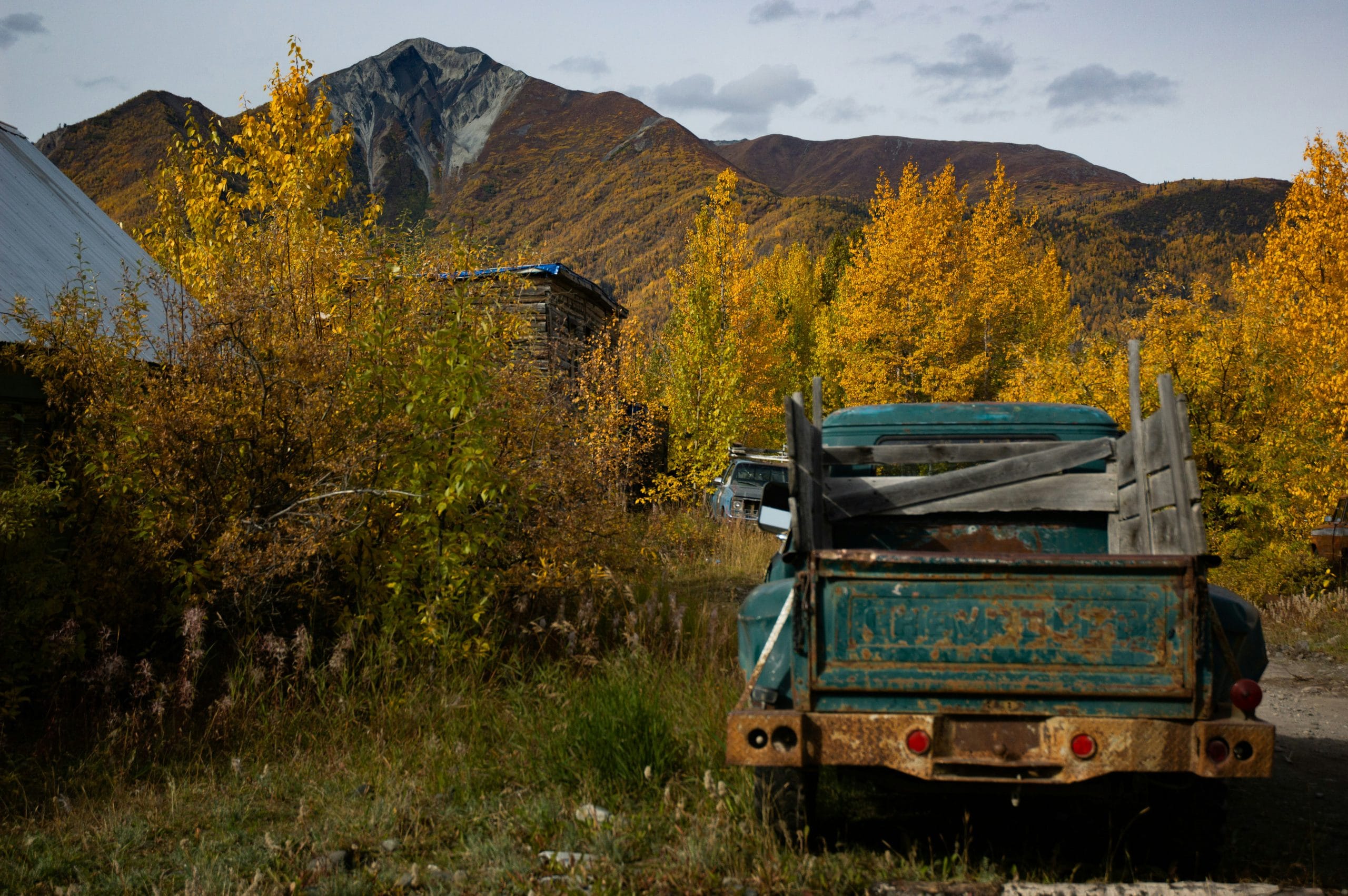
Every fall, forests across America transform into shades of yellow, orange, red, bronze, and gold.
But catching fall colors at their best isn’t as simple as picking a weekend in October.
Peak foliage can arrive weeks apart depending on where you travel. Elevation, latitude, temperature, rainfall, tree species, and weather all influence when leaves change. A mountain valley may still be green while higher elevations nearby are already glowing orange and red.
That’s what makes fall road trips so much fun.
You don’t have to wait for fall to come to you.
You can follow it.
This guide will help you understand when fall colors happen, where to find them, how to plan a foliage road trip, and how to discover quieter places away from the busiest overlooks.
Fall Colors at a Glance
Season: September through November
Earliest color: Northern states and higher elevations
Latest color: Southern states and lower elevations
Best overall month: October
Best time of day: Early morning and late afternoon
Best weather for photos: Partly cloudy or immediately after rain
Best crowd strategy: Weekdays and early mornings
Best planning strategy: Choose your destination shortly before your trip rather than relying on one historical peak date
When Do Fall Colors Start?
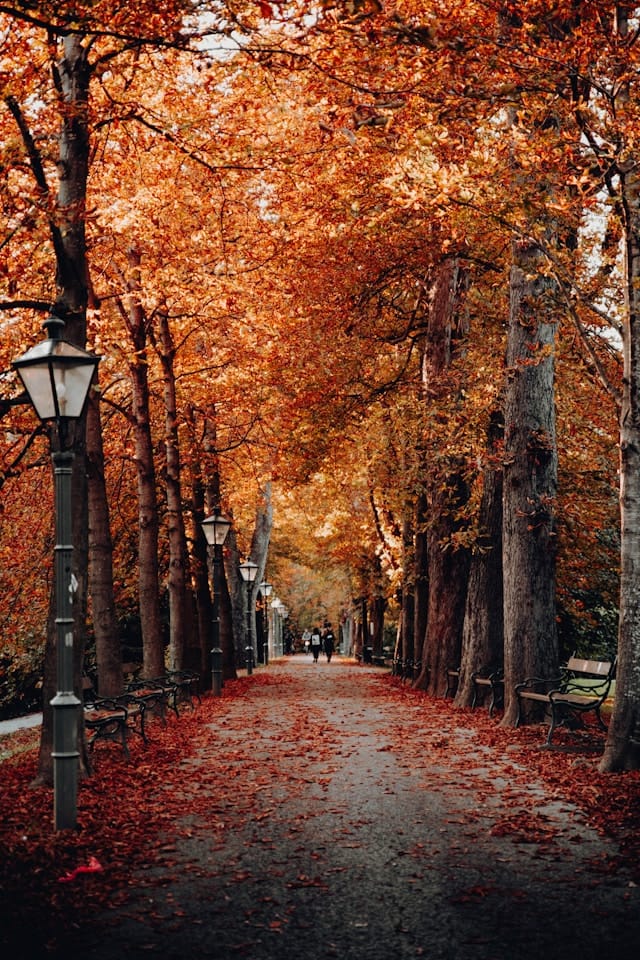
There is no single fall-color season for the entire United States.
The show generally begins in colder northern regions and at higher elevations before gradually moving south and downhill.
That means fall foliage can be found somewhere in the country for a surprisingly long period.
September
September is when travelers should begin watching northern and high-elevation destinations.
Look toward places such as:
- Northern New England
- Upper Michigan
- Northern Minnesota
- Rocky Mountain high country
- Higher elevations of the western mountains
Some of these areas can begin changing surprisingly early.
Early October
By early October, the fall-color season begins expanding rapidly.
This can be an excellent period for:
- Michigan
- Wisconsin
- Minnesota
- Vermont
- New Hampshire
- Maine
- Upstate New York
- Mountain regions of Colorado and the West
Depending on the year, some northern destinations may already be near or beyond peak while locations farther south are just beginning.
Mid-October
For many travelers, this is the heart of fall road-trip season.
Color can stretch across large portions of:
- The Midwest
- Northeast
- Appalachian Mountains
- Mid-Atlantic
- Pacific Northwest
- Northern and central mountain regions
It’s also when some of America’s most famous foliage destinations become busiest.
That’s a good reason to start looking beyond them.
Late October
Don’t put away the road-trip map when northern leaves begin falling.
Instead, start looking south.
Late October can bring excellent color to:
- Southern Midwest
- Mid-Atlantic
- Lower Appalachian Mountains
- Southern portions of the Pacific Northwest
- Parts of the Southeast
This is where understanding the progression of fall becomes useful.
When one region finishes, another may just be starting.
November
Yes, you can still take a fall-color trip in November.
Look farther south and toward lower elevations.
Depending on weather and location, autumn color can linger in places across:
- Alabama
- Georgia
- Tennessee
- Arkansas
- North Carolina
- South Carolina
- Southern Appalachian foothills
- Other parts of the Southeast
Instead of thinking of fall foliage as an October event, think of it as a moving season.
What Makes Leaves Change Color?
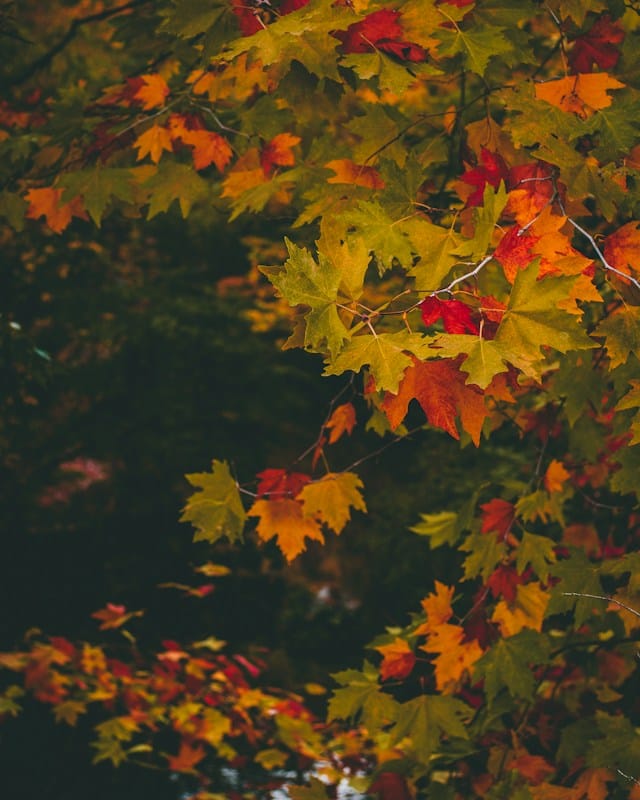
Leaves contain several natural pigments.
During spring and summer, chlorophyll gives leaves their familiar green color.
As daylight decreases and temperatures cool, trees begin preparing for winter. Chlorophyll production slows and eventually stops.
As the green fades, other pigments become visible.
Yellow and Gold
Carotenoids help create yellow and golden leaves.
Orange
Mixtures of pigments can produce brilliant orange shades.
Red and Purple
Anthocyanins contribute to red and purple colors in certain tree species.
Different forests contain different mixtures of trees, which is why fall landscapes can look dramatically different from one part of the country to another.
What Determines Peak Fall Color?
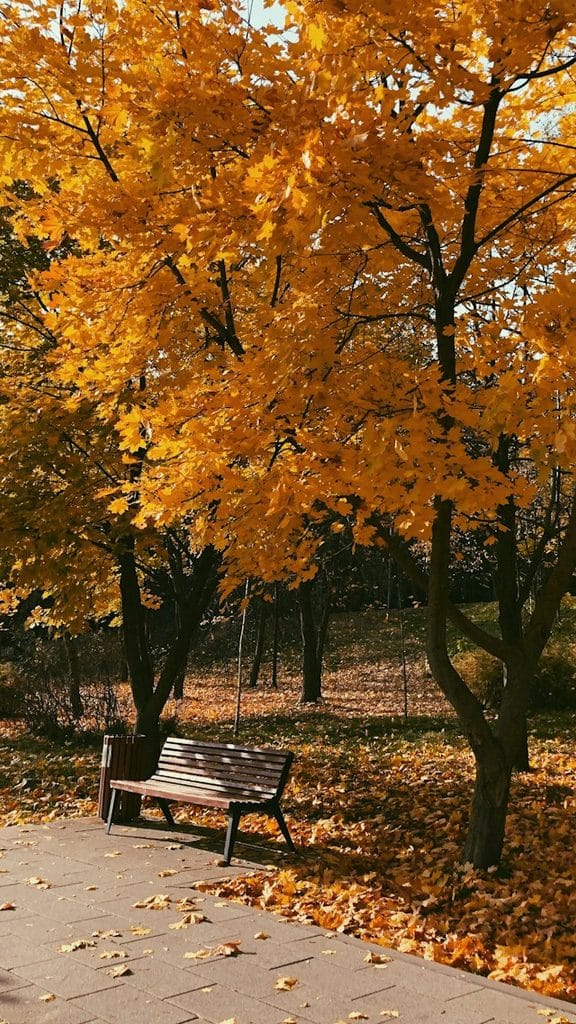
Historical peak dates are useful.
They’re just not guarantees.
Several factors influence when leaves change.
Temperature
Cool autumn nights can help trigger the seasonal transition.
Daylight
Shortening days are one of the most reliable signals trees receive that winter is approaching.
Rainfall
Conditions earlier in the growing season can influence foliage health.
Wind
A perfectly colorful forest can lose leaves quickly after strong winds or storms.
Elevation
Higher elevations frequently change before nearby valleys.
Latitude
Northern locations generally experience autumn earlier than southern ones.
That’s why checking current conditions matters more than simply looking at last year’s peak date.
How to Find Peak Fall Colors
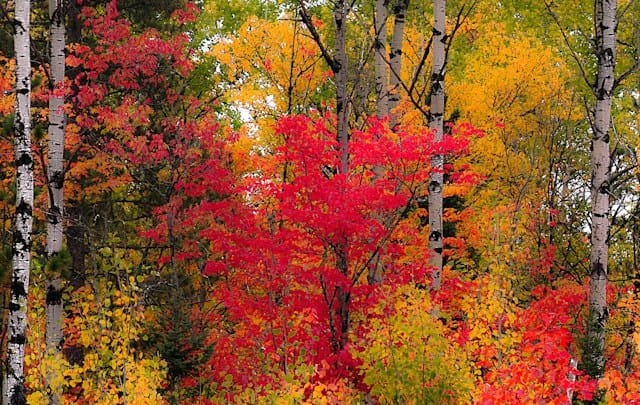
The best fall-color trip usually begins a few days before you leave.
Two Weeks Before
Choose several possible regions rather than committing to one exact viewing location.
One Week Before
Start checking current foliage maps and state tourism reports.
Three Days Before
Look at weather forecasts and compare nearby elevations.
The Day Before
Check road conditions, park alerts, trail closures, and updated foliage reports.
Then make your final decision.
City Unknown Tip: Give yourself two or three destination options within driving distance. If one area hasn’t changed yet—or has already lost its leaves—you can pivot to another.
Where to See Fall Colors
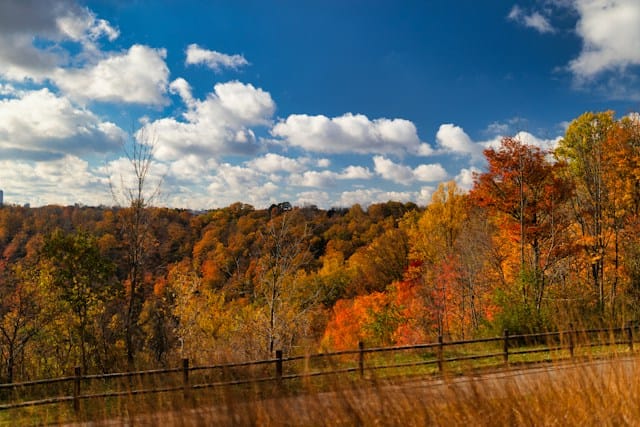
You don’t need a famous national park to have an incredible fall trip.
Some of the best foliage experiences happen on ordinary roads through extraordinary landscapes.
Scenic Byways
Scenic highways are obvious choices because they’re designed around interesting landscapes.
But don’t be afraid to turn off them.
Sometimes a county road running through forest and farmland is even better.
State Parks
State parks can be excellent alternatives to heavily visited national parks.
Look for:
- Lakes
- Waterfalls
- Mountain overlooks
- Forest trails
- Rivers
- Historic sites
Many provide the same fall scenery with fewer crowds.
State Forests
Want to get farther away?
Look at state forests.
They can contain enormous networks of roads and trails where the forest itself becomes the attraction.
Small Towns
Fall road trips shouldn’t only be about leaves.
A small town surrounded by changing trees can give you local restaurants, historic downtowns, antique shops, coffee shops, cider, festivals, and places to stay.
That’s what turns leaf-peeping into a trip rather than a photo stop.
Lakes and Rivers
Water adds another dimension to fall color.
On calm days, autumn trees reflect across lakes and rivers, essentially doubling the landscape.
Look for:
- Lake overlooks
- River valleys
- Canoe routes
- Reservoirs
- Waterfront trails
Waterfalls
Waterfalls surrounded by autumn forest are hard to beat.
They also give you something interesting to explore even if the foliage isn’t quite at peak.
Mountain Overlooks
Elevation can provide sweeping views across thousands of trees at once.
Remember that elevation also affects timing.
The trees around an overlook may be at peak while the valley below is still changing.
Follow Fall From North to South
One of the best ways to understand American fall travel is to think of it as a journey.
Stage 1 — Northern & High Elevation
September
Northern states and high mountain elevations begin changing.
Stage 2 — Northern Fall
Late September–Early October
The Upper Midwest, northern New England and other cooler regions become increasingly colorful.
Stage 3 — Peak Fall Road-Trip Season
October
Large portions of the Midwest, Northeast, mountains and Mid-Atlantic experience autumn color.
Stage 4 — Southern Migration
Late October
The color transition works farther south and into lower elevations.
Stage 5 — Southern Fall
November
Parts of the Southeast can still provide excellent autumn scenery long after northern leaves have fallen.
Instead of asking:
“When is peak fall color?”
Ask:
“Where is peak fall color when I want to travel?”
That’s a much better way to plan.
How to Plan a Fall Color Road Trip
Don’t build the itinerary around covering as many miles as possible.
Build it around stops.
A good fall route might look like:
Small Town → Scenic Road → Waterfall → Local Restaurant → Forest Trail → Overlook → Small Town
That gives you plenty to do even if the leaves aren’t exactly at peak.
Take the Backroads
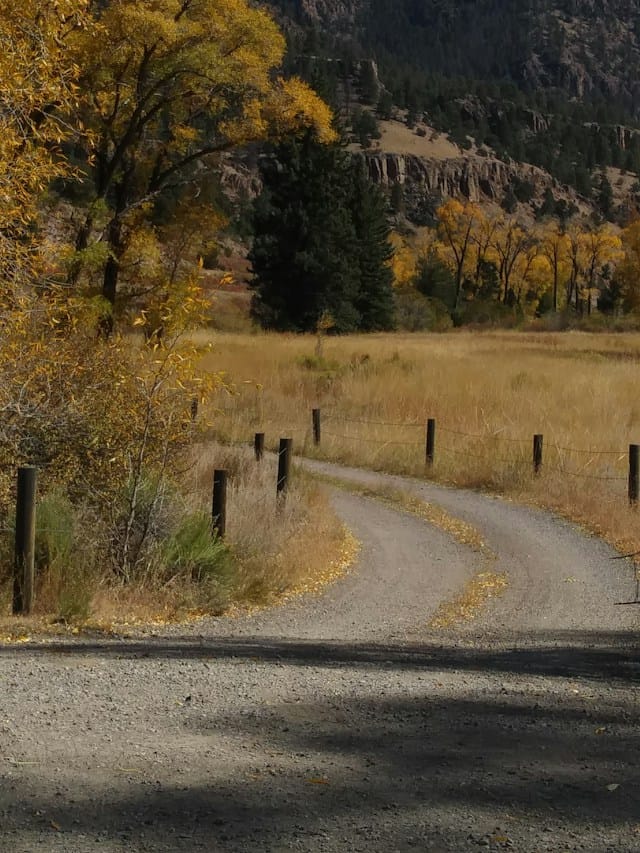
Interstates are useful for getting somewhere.
They’re rarely the reason you remember a trip.
Once you’re near your destination, switch to slower roads.
Look for:
- Historic highways
- Scenic byways
- County roads
- Forest roads
- River roads
- Lake roads
- Mountain passes
If a road takes 30 minutes longer but winds through forest, farms, and small towns, take the slower road.
You’re already there to see the scenery.
Get Out of the Car
A scenic drive is only one way to experience fall.
Hike
A short trail can completely change your perspective.
Look for trails leading to waterfalls, lakes, overlooks, and ridgelines.
Bike
Rail trails and quiet country roads can be excellent during autumn.
Paddle
Canoeing or kayaking beneath colorful trees can provide an entirely different view.
Ride
Some mountain destinations operate gondolas, chairlifts, or scenic railways during fall.
Walk Through Town
Historic neighborhoods and downtown districts can be just as colorful as forests.
How to Avoid Fall Foliage Crowds
Beautiful fall weekends can turn famous overlooks into parking lots.
You don’t necessarily need to skip the famous places.
Just change your strategy.
Go on a Weekday
Tuesday through Thursday can feel completely different from Saturday.
Arrive Early
Be there when everyone else is still eating breakfast.
Stay Overnight
Sleeping near your destination lets you explore before day-trippers arrive.
Go Beyond the Famous Overlook
Drive another 10 or 20 miles.
There’s often something just as beautiful nearby.
Explore Lesser-Known State Parks
The famous national park may be packed while a state park an hour away is nearly empty.
Visit Small Towns Between Attractions
Some of the best discoveries aren’t destinations people search for before leaving home.
Best Time of Day to See Fall Colors
Light can completely change how foliage looks.
Morning
Morning can provide softer light, mist, calm water, and fewer people.
Midday
Colors can appear flatter under harsh direct sunlight, but cloudy days can work surprisingly well.
Late Afternoon
Warm sunlight can make orange, red, and yellow leaves glow.
After Rain
Wet leaves often appear richer and more saturated.
Just watch for slippery trails.
Photographing Fall Colors
You don’t need expensive camera equipment.
A phone is enough if you pay attention to light and composition.
Try:
- Shooting early or late in the day
- Using reflections in lakes
- Including roads or trails leading into the scene
- Photographing individual leaves as well as wide landscapes
- Using people or buildings to show scale
- Looking behind you after reaching an overlook
And don’t spend the entire trip looking through a screen.
Some views are better remembered than photographed.
What to Pack for a Fall Road Trip
Autumn weather can change quickly.
Bring:
- Layers
- Rain jacket
- Comfortable walking shoes
- Water
- Snacks
- Phone charger or battery pack
- Offline maps
- Small flashlight
- Camera
- Blanket for overlooks or picnics
If you’re traveling into mountains or remote forests, prepare for temperatures that may be significantly colder than where you started.
Turn Fall Colors Into a Weekend
Don’t make the leaves the only reason for the trip.
Combine foliage with other seasonal experiences.
Look for:
Local Eats
Find independent diners, bakeries, cafes, breweries, and restaurants instead of stopping at the same highway chains.
Orchards
Apple orchards and cider mills fit naturally into a fall road trip.
Historic Places
Old mills, covered bridges, mining towns, farms, and historic downtowns look especially good surrounded by autumn color.
Hidden Gems
Search for unusual attractions along your route.
Festivals
Small-town fall festivals can turn an afternoon drive into a full weekend.
City Unknown’s Fall Road Trip Rule
Here’s our favorite rule:
For every famous stop, find one place nearby you’ve never heard of.
Visiting a famous scenic overlook?
Find a small town 20 miles away.
Driving a legendary scenic highway?
Take one side road.
Going to a popular state park?
Find a local restaurant outside the park entrance.
Those little detours are often where the best stories come from.
Before You Go
Fall conditions can change quickly.
Always check current:
- Foliage reports
- Weather
- Road closures
- Park conditions
- Trail access
- Operating hours
This is especially important in mountain areas and remote northern destinations where early snow and rapidly changing weather are possible.
Don’t rely entirely on historical peak-color calendars.
Use them to choose a general period, then use current conditions to choose exactly where to go.
Explore Fall Colors by State
Ready to start chasing the color?
Explore our state fall guides:
Michigan Fall Colors
Follow autumn from the Upper Peninsula through northern and southern Michigan.
Oregon Fall Colors
Discover colorful river valleys, waterfalls, mountain roads, and overlooked Oregon foliage destinations.
Washington Fall Colors
Find mountain passes, forests, small towns, and scenic fall drives across Washington.
Alabama Fall Colors
Follow the season south into Alabama’s mountains, forests, waterfalls, and scenic backroads.
And we’re adding more states as fall moves across America.
Keep Exploring
Fall gives you an excuse to take the long way.
Skip the interstate for an afternoon.
Follow a river road.
Stop at the diner with six cars outside.
Walk down the trail you almost passed.
Turn onto the scenic road simply because you’ve never driven it before.
You might leave home looking for fall colors.
You may come back remembering everything you found along the way.
Take the scenic route. Go somewhere unknown.
Fall Color FAQ
What month is best for fall colors?
October provides fall color across many parts of the United States, but there isn’t one nationwide peak. Northern and high-elevation destinations can begin changing in September, while southern locations may remain colorful into November.
What causes leaves to change color?
Shorter daylight and cooler seasonal conditions cause trees to reduce chlorophyll production. As green chlorophyll disappears, yellow, orange, red, and other pigments become visible.
Where do fall colors start first?
Fall colors generally appear earlier in colder northern regions and at higher elevations before progressing toward southern locations and lower elevations.
How long does peak fall color last?
Peak conditions can be brief. Weather, wind, rain, temperature, and tree species all affect how quickly a forest changes and how long colorful leaves remain on the trees.
How can I find peak fall colors near me?
Check current state tourism foliage reports, forestry agencies, park updates, weather conditions, and regional fall-color maps shortly before traveling.
Are weekdays better for viewing fall colors?
Usually. Popular scenic routes, parks, and overlooks can become extremely busy on peak autumn weekends. Weekday mornings are often a much quieter experience.
Do I need to visit a national park to see great fall colors?
No. State parks, state forests, county roads, river valleys, small towns, lakes, and scenic byways can provide outstanding fall foliage—and often with significantly smaller crowds.