Washington’s biggest attractions are difficult to ignore.
Mount Rainier towers over the landscape. Olympic National Park contains rain forests and wild coastline. Seattle has one of America’s most recognizable skylines.
But between those famous destinations is another Washington.
It’s filled with remote beaches, unusual geological formations, tiny communities, waterfalls, islands, forgotten roads, desert landscapes, and places that rarely appear on a first-time visitor’s itinerary.
Here are 25 hidden gems in Washington you probably haven’t heard of.
Quick Picks: Washington Hidden Gems
Best Coastal Escape: Cape Flattery
Best Strange Landscape: Palouse Falls
Best Island Adventure: Sucia Island
Best Waterfall Detour: Falls Creek Falls
Best Small-Town Escape: Stehekin
Best Geological Wonder: Dry Falls
Best Roadside Oddity: Maryhill Stonehenge
Best Forgotten Landscape: Ginkgo Petrified Forest
1. Cape Flattery — Olympic Peninsula
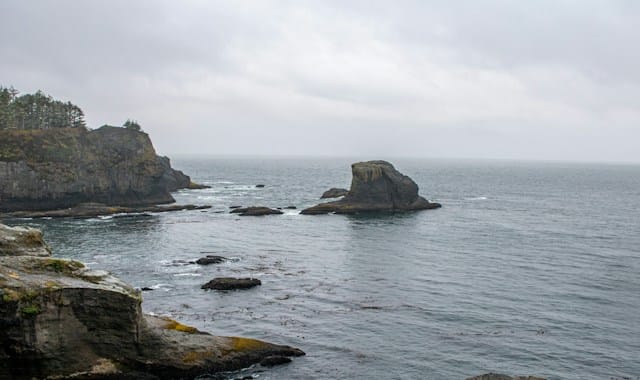
At the northwestern edge of the contiguous United States, a trail leads through coastal forest toward a series of dramatic viewpoints.
Sea stacks, caves, cliffs, and the meeting of enormous bodies of water make Cape Flattery feel like the edge of the map.
The site is on the Makah Reservation, so visitors should follow current tribal access and permit requirements.
Why it’s worth the detour: Few places make Washington feel wilder.
2. Shi Shi Beach — Olympic Coast
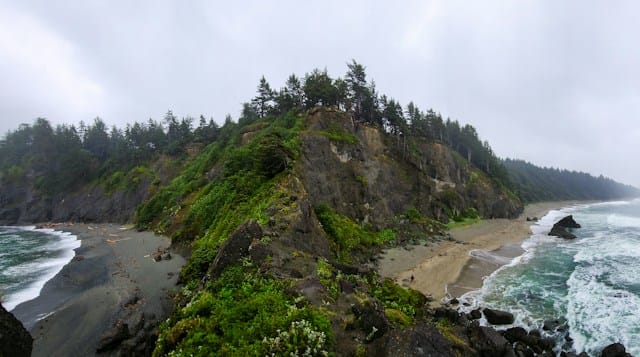
Getting to Shi Shi Beach requires more commitment than pulling into a roadside viewpoint.
That’s part of its appeal.
After reaching the coast, visitors encounter sea stacks, driftwood, broad sand, and the wild Pacific shoreline.
Why it’s worth the detour: It delivers the rugged Olympic Coast experience without feeling like a quick photo stop.
3. Stehekin — Lake Chelan
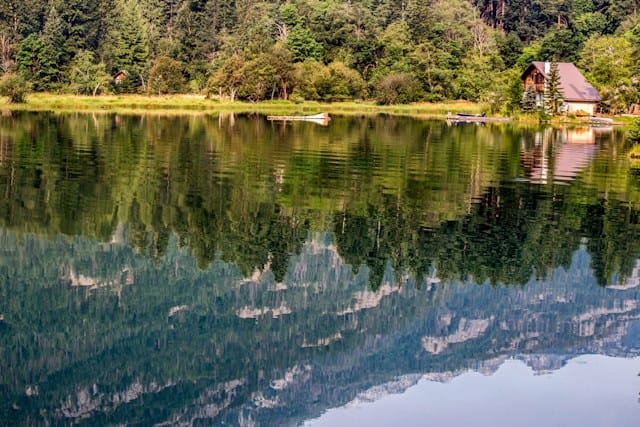
There are no highways into Stehekin.
Visitors typically arrive by boat, trail, or small aircraft, which immediately changes the pace of the trip.
The remote community sits at the head of Lake Chelan surrounded by mountain wilderness.
Why it’s worth the detour: Simply getting there feels like part of the adventure.
4. Sucia Island — San Juan Islands
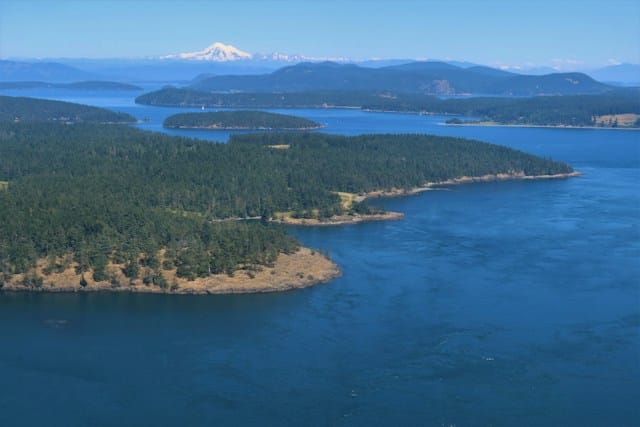
Sucia Island is part of the San Juan archipelago but feels removed from the islands most visitors know.
Its unusual shoreline, coves, trails, and marine scenery make it particularly appealing to boaters and paddlers.
Why it’s worth the detour: It’s an island escape within an island destination.
5. Lime Kiln Point — San Juan Island
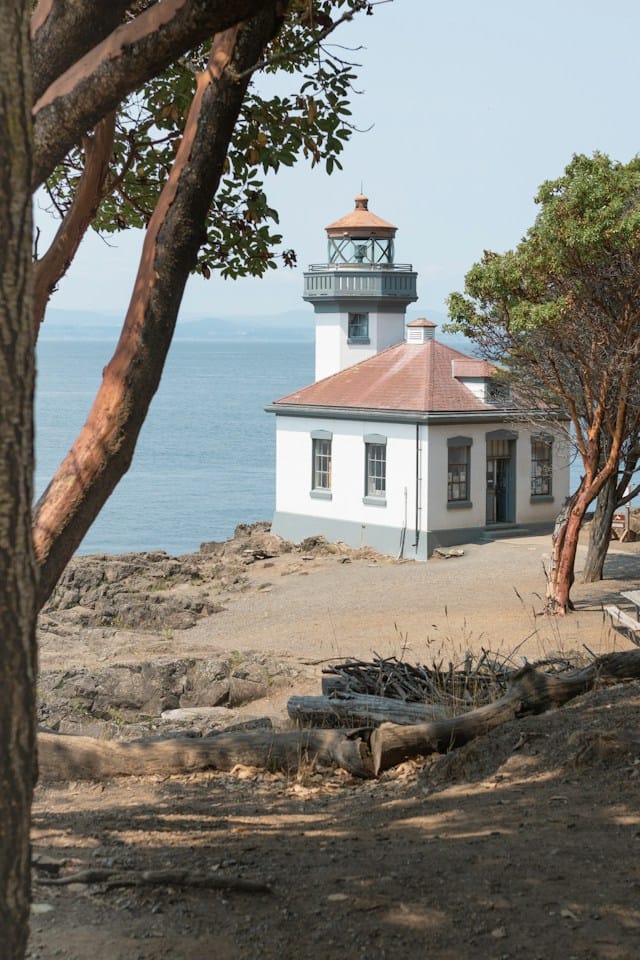
Known for its historic lighthouse and views across Haro Strait, Lime Kiln Point is also associated with shore-based whale watching.
Even without wildlife sightings, the rocky coastline and lighthouse make the stop worthwhile.
Why it’s worth the detour: It combines classic Pacific Northwest scenery with the possibility of seeing marine wildlife from land.
6. Fort Worden — Port Townsend
Old military bunkers, coastal bluffs, beaches, historic buildings, and views across Puget Sound make Fort Worden feel like several destinations combined.
You can wander through old defensive structures and then walk directly toward the water.
Why it’s worth the detour: History, architecture, and coastal scenery overlap beautifully here.
7. Port Gamble — Kitsap Peninsula
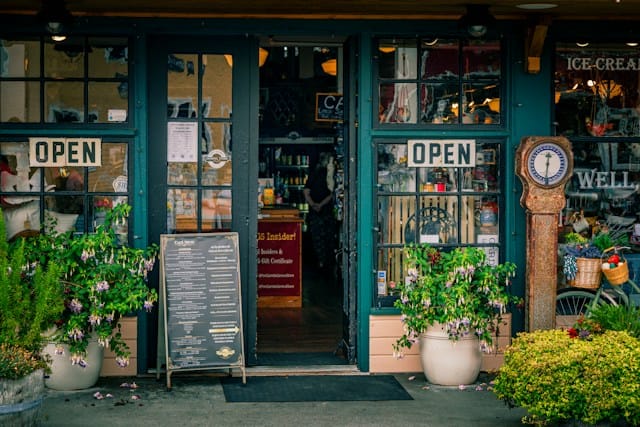
Port Gamble looks like a New England village unexpectedly transported to Washington.
Historic buildings overlook the water while trails and small businesses make it an easy addition to a Kitsap Peninsula road trip.
Why it’s worth the detour: It’s one of Washington’s most unexpectedly picturesque historic communities.
8. Vance Creek Bridge Area — Olympic Peninsula
An enormous former railroad bridge rises above a forested gorge near Shelton.
Access around the structure has changed over time, and visitors should respect all barriers and current restrictions rather than attempting to walk onto closed portions.
Why it’s worth the detour: Even viewed legally from appropriate areas, the scale of the old structure is remarkable.
9. Falls Creek Falls — Gifford Pinchot National Forest
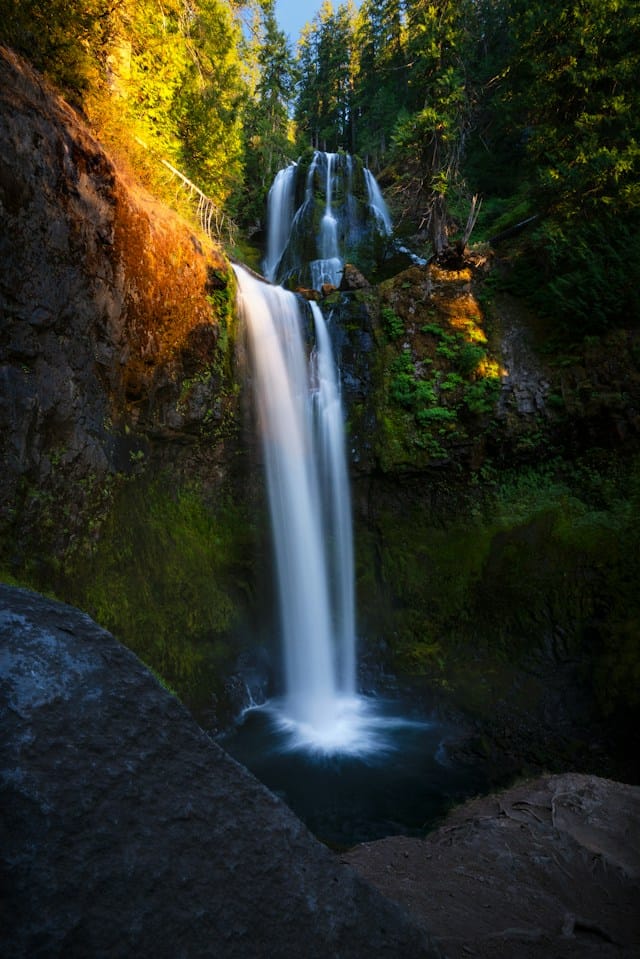
Washington has plenty of famous waterfalls, but Falls Creek Falls can still surprise travelers.
A forest trail leads toward a powerful multi-tiered cascade framed by moss and dense greenery.
Why it’s worth the detour: It provides quintessential Pacific Northwest waterfall scenery without requiring a trip to the state’s most famous parks.
10. Ape Cave — Mount St. Helens Area
Beneath the forest near Mount St. Helens is one of the longest lava tubes in North America.
Ape Cave lets visitors enter a completely different volcanic landscape from the one visible above ground.
Bring proper lights, warm clothing, and check current access requirements before visiting.
Why it’s worth the detour: You’re exploring the inside of an ancient lava flow.
11. Windy Ridge — Mount St. Helens
Most Mount St. Helens visitors approach from the west.
Windy Ridge provides a dramatically different perspective from the northeast, looking toward the volcano and the landscape reshaped by the 1980 eruption.
Seasonal road access is a major consideration.
Why it’s worth the detour: The route feels remote and the volcanic landscape is extraordinary.
12. Palouse Falls — Eastern Washington
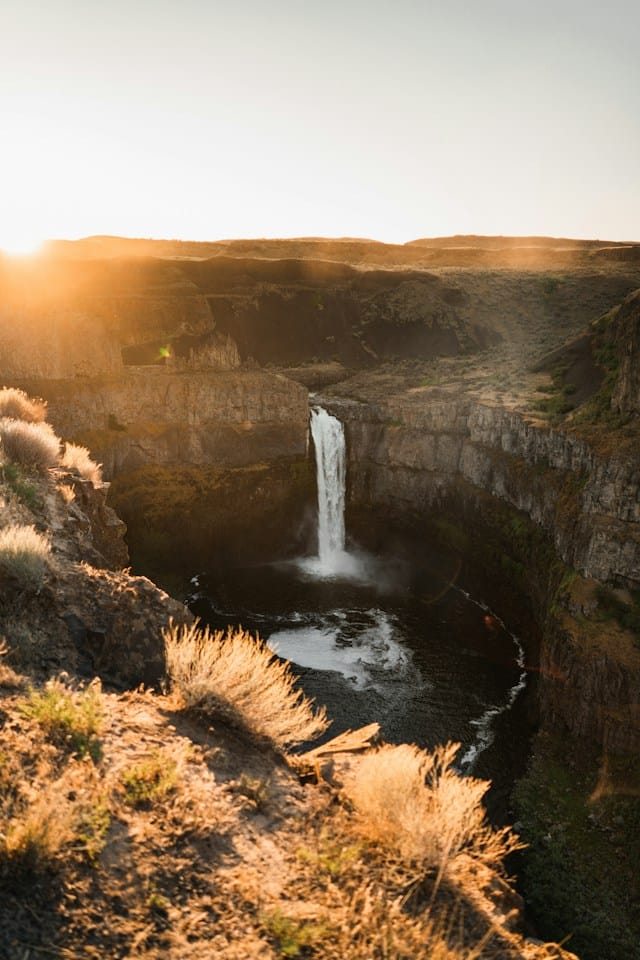
A powerful waterfall plunges into a canyon surrounded by dry, layered terrain.
It’s a scene that looks nothing like the evergreen Washington of postcards.
Why it’s worth the detour: Palouse Falls demonstrates just how dramatically Washington’s landscape changes east of the Cascades.
13. Dry Falls — Coulee City Area
Imagine Niagara Falls several times wider—but without the water.
Dry Falls is a remnant of enormous Ice Age floods that reshaped Eastern Washington.
The overlook helps reveal the scale of the ancient waterfall and surrounding coulee.
Why it’s worth the detour: Understanding what happened here makes the landscape almost unbelievable.
14. Ginkgo Petrified Forest — Vantage
Near the Columbia River lies one of Washington’s strangest geological collections.
Petrified wood reveals evidence of ancient forests preserved within a landscape now dominated by dry hills and basalt.
Why it’s worth the detour: Today’s desert-like scenery makes the area’s ancient forest history even more surprising.
15. Frenchman Coulee — Near Vantage
Basalt cliffs rise above a desert coulee near the Columbia River.
Rock climbers know the area well, but road-trippers can appreciate the strange geology and open scenery without climbing anything.
Why it’s worth the detour: It feels completely removed from rainy western Washington.
16. Maryhill Stonehenge — Columbia River Gorge
Perched above the Columbia River is a full-size concrete memorial modeled after Stonehenge.
It was built as a World War I memorial rather than as a roadside gimmick, giving the unusual structure a much deeper story.
Why it’s worth the detour: Ancient-inspired architecture overlooking the Columbia is not something you expect to encounter on a Washington backroad.
17. Mima Mounds — Near Olympia
Thousands of rounded grassy mounds cover portions of the landscape at Mima Mounds Natural Area Preserve.
Exactly how all of the mounds formed has long generated discussion and competing explanations.
A trail and viewing areas let visitors explore without disturbing the fragile terrain.
Why it’s worth the detour: It’s a landscape mystery hiding surprisingly close to Olympia.
18. Billy Frank Jr. Nisqually National Wildlife Refuge — Puget Sound
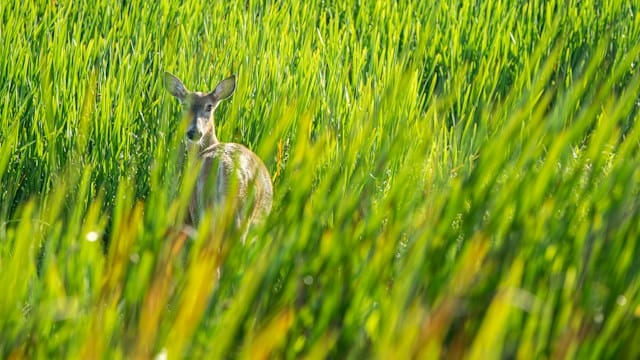
Boardwalks and trails cross wetlands where the Nisqually River meets Puget Sound.
Birds, tidal habitat, distant mountains, and open water make this a quiet counterpoint to nearby urban areas.
Why it’s worth the detour: It feels remarkably wild for a place positioned between major population centers.
19. Iron Goat Trail — Stevens Pass Area
The Iron Goat Trail follows portions of an old Great Northern Railway route through the Cascades.
Railroad remnants and mountain forest give the trail an unusual sense of history.
Visitors should remain on designated trails and respect closures around unstable or restricted structures.
Why it’s worth the detour: It’s part hike, part railroad-history expedition.
20. Northern State Recreation Area — Sedro-Woolley
Trails cross land once associated with Northern State Hospital.
Some historic structures and remnants remain in the broader landscape, while the recreation area provides legal public access to portions of the property.
Why it’s worth the detour: History and quiet trails combine in an unusually atmospheric setting.
21. Gardner Cave — Crawford State Park
Near Washington’s northeastern corner, Gardner Cave extends underground beneath a landscape many travelers never reach.
Guided access reveals limestone formations far removed from the volcanic geology found elsewhere in the state.
Why it’s worth the detour: It’s a genuine underground surprise near the Canadian border.
22. Metaline Falls — Northeastern Washington
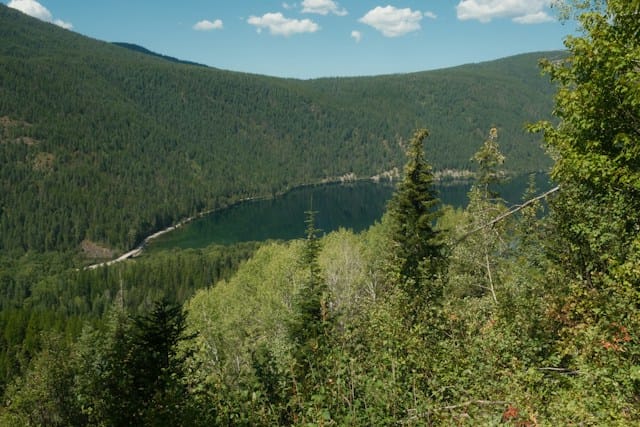
Metaline Falls is the kind of tiny Washington town many travelers never encounter.
Surrounded by forest, mountains, and the Pend Oreille River region, it makes a quiet base for exploring the state’s far northeast.
Why it’s worth the detour: It feels a long way from Seattle in every possible sense.
23. Republic — Ferry County
Republic combines small-town character with fossils and mining history.
The surrounding region is filled with forest roads, lakes, mountains, and landscapes that see far fewer visitors than Washington’s western half.
Why it’s worth the detour: It’s an excellent gateway to one of the state’s least-explored regions.
24. Steamboat Rock — Grand Coulee Area
A massive basalt formation rises from Banks Lake in the middle of Eastern Washington’s coulee country.
Water, cliffs, desert, and enormous skies create a landscape that seems almost Southwestern.
Why it’s worth the detour: It showcases Washington scenery many first-time visitors don’t realize exists.
25. Cape Disappointment’s Quieter Corners — Southwest Washington
The name gets attention, but Cape Disappointment contains much more than one viewpoint.
Forest trails, old military sites, lighthouses, cliffs, and beaches make it worth exploring beyond the first parking area.
Why it’s worth the detour: It’s possible to combine maritime history, forest, wild coastline, and unusual viewpoints in one destination.
Turn These Washington Hidden Gems Into a Road Trip
Washington’s mountains and waterways make regional trips much more enjoyable than trying to connect everything at once.
Olympic & Kitsap Route
Port Gamble → Fort Worden → Cape Flattery → Shi Shi Beach
Volcanic Washington Route
Ape Cave → Mount St. Helens → Falls Creek Falls
Eastern Washington Strange Landscapes
Palouse Falls → Dry Falls → Steamboat Rock → Ginkgo Petrified Forest
Far Northeast Adventure
Republic → Metaline Falls → Gardner Cave
Columbia River Oddities
Frenchman Coulee → Maryhill Stonehenge → Columbia River viewpoints
The City Unknown Rule
Washington rewards travelers who cross the mountains.
Seattle, Mount Rainier, Olympic National Park, and the San Juan Islands may introduce you to the state, but don’t assume they define it.
For every famous Washington destination, find one place on the map that makes you ask:
What’s over there?
Then go find out.
Before You Go
Washington’s geography means access conditions can change dramatically by season.
Mountain roads may remain snow-covered long after lowland roads are clear. Wildfires can affect summer travel, and coastal destinations may involve tides, tribal lands, permits, or other access requirements.
Check the managing agency’s current information before heading into remote areas.
Respect tribal lands, closures, private property, fragile environments, and historic structures.
Keep Exploring Washington
The best way to understand Washington is to stop thinking of it as one landscape.
Cross the Cascades and everything changes.
Take a ferry.
Follow the Columbia.
Drive toward a tiny northeastern town.
Walk through a lava tube.
Stand above an ancient waterfall that disappeared thousands of years ago.
The Washington you don’t expect may turn out to be the one you remember.
Frequently Asked Questions
What are some of the best hidden gems in Washington?
Stehekin, Cape Flattery, Dry Falls, Sucia Island, Mima Mounds, Falls Creek Falls, Ginkgo Petrified Forest, and the northeastern communities around Republic and Metaline Falls are excellent choices.
What unusual places can you visit in Washington?
Maryhill Stonehenge, Mima Mounds, Ape Cave, Dry Falls, and Ginkgo Petrified Forest are some of the state’s more unusual destinations.
Are there hidden gems near Seattle?
Yes. Port Gamble, Fort Worden, the Nisqually wildlife refuge, and several destinations along the Kitsap and Olympic peninsulas make excellent additions to a Seattle-area trip.
Is Eastern Washington worth visiting?
Absolutely. Eastern Washington offers waterfalls, coulees, desert landscapes, small towns, protected forests, geological formations, and far fewer visitors than many destinations west of the Cascades.